By Investigative Desk
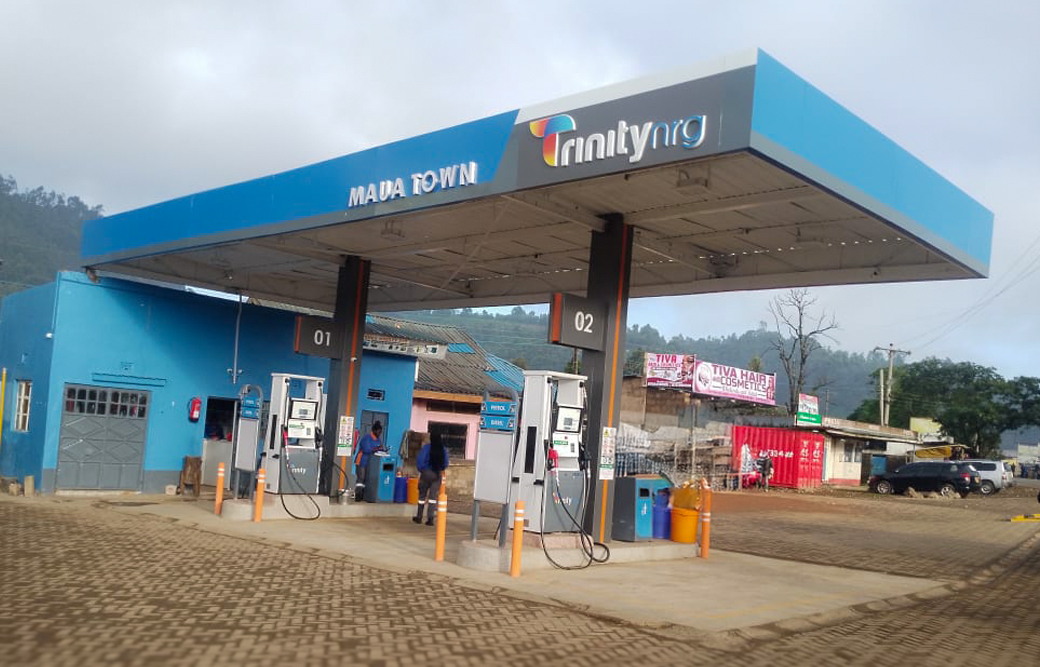
A Kenyan businesswoman served as executive director and co-owner of South Sudan’s Trinity Energy at the time the company entered a controversial $30 million trade finance arrangement with the African Export-Import Bank — a deal that investigators found violated South Sudanese law, raised multiple red flags for bribery and money laundering, and resulted in fuel being supplied to a military force accused of war crimes.
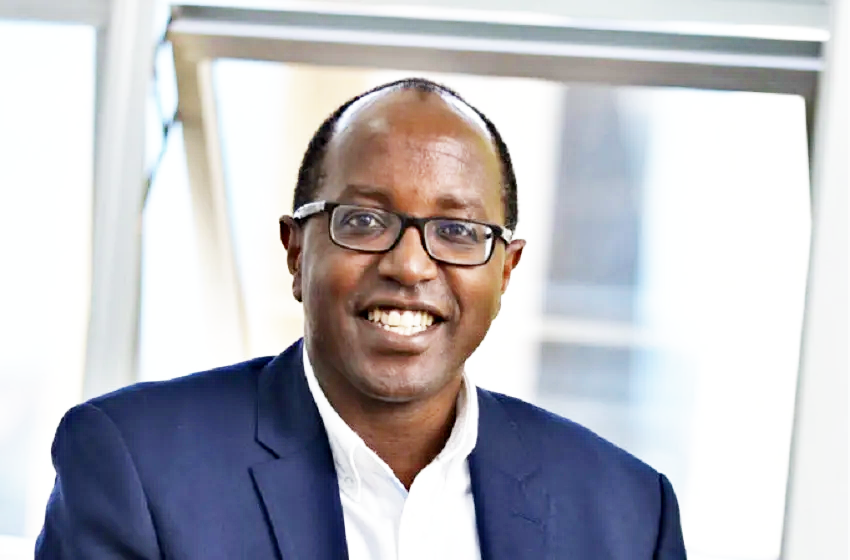
Ann Kathure Rutere held a 10 percent stake in Trinity Holdings — the entity that owns 99 percent of Trinity Energy Limited — through its chairman and her then-husband, South Sudanese national Akol Emmanuel Ayii Madut. At the time the Afreximbank deal was arranged and implemented, Rutere was one of three directors of Trinity Energy and served as the company’s executive director. She was, in other words, not a passive shareholder. She was operational leadership.

The 2018 deal — and the three-year investigation into its implementation by The Sentry — produced a February 2023 report titled “Crude Dealings: How Oil-Backed Loans Raise Red Flags for Illegal Activity in South Sudan.” The findings implicate Trinity Energy in bribery, trade-based money laundering, tax fraud, black-market currency exchange, and the supply of fuel to a UN-sanctioned military commander during active civil conflict. Rutere’s role sits squarely within that timeline.
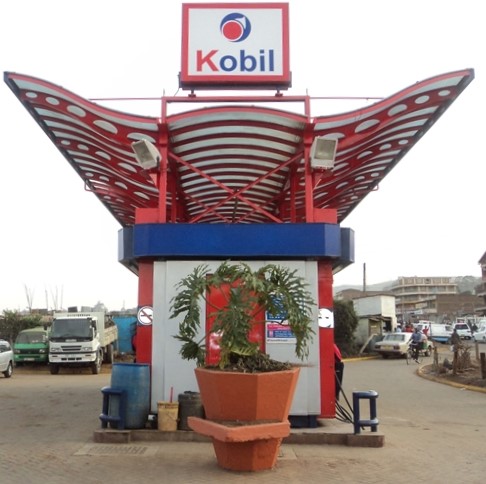
In April 2018, Trinity Energy agreed to a revolving trade finance facility with Cairo-based Afreximbank for a series of $30 million loans, each repayable after three months. The stated purpose was to purchase diesel and gasoline for the South Sudanese market, where chronic fuel shortages had created economic paralysis. Trinity drew letters of credit under the facility to buy petroleum from KenolKobil in Kenya — a Nairobi-listed oil marketer — and import it into South Sudan.
In exchange for providing the financing structure, Afreximbank and Trinity Energy received something far more valuable than commercial margins: the government of South Sudan committed to award cargoes of crude oil to Trinity Energy as part of the arrangement. Trinity — a company that had never previously traded crude in its existence — was thus handed privileged access to South Sudan’s most lucrative market. Crude oil earnings accounted for 81 percent of South Sudan’s government revenue in the second half of 2018, the precise period when the deal came into force.
The outcome was as extraordinary as it was opaque. Trinity Energy was awarded more than 40 percent of all crude oil cargoes contracted by the South Sudanese government between June 2018 and May 2019.
Those cargoes were sold to Glencore Singapore Pte Ltd — designated in the deal as the “original offtaker.” Glencore shipped South Sudanese crude worth $376 million in 2019 alone, every barrel of it through its arrangement with Trinity and Afreximbank. The deal was never made public. Parliament was not informed. No competitive process determined that Trinity should control nearly half the country’s crude allocation.
It was, by design, invisible.
The Sentry’s investigation, conducted through interviews with a former Trinity Energy employee — whistle-blower Biswick Kaswaswa, who served as Finance Manager during the deal’s implementation — and reviews of bank statements, internal emails, ministerial correspondence, and the trade finance facility itself, documented a systematic pattern of financial misconduct.
Trinity Energy spent approximately $6.5 million to secure the Afreximbank deal and arrange the first two letters of credit. Within that total: $2.5 million in fees linked to the Afreximbank facility, $2.5 million on visits, meetings and travel, and $1.5 million described internally as “lobbyist fees and facilitation fees.” The last figure is the most telling. In procurement terms, $1.5 million in facilitation fees for a deal with a multilateral bank and a sovereign government is not a standard cost of doing business. It is a red flag for bribery.
The evidence goes further. Trinity Energy paid a check for SSP 18.7 million — approximately $125,000 — directly to members of the South Sudanese government’s Technical Loan Committee, the body whose approval was required for the Afreximbank deal to proceed. The committee approved the deal. Its members were paid by the company seeking approval.
During the period of the deal’s operation, Trinity Energy was also called upon for additional financial favours by the government it was enriching. It provided a $400,000 cash loan to cover the overseas travel expenses of then-First Vice President Taban Deng Gai. It extended a 100 million South Sudanese pounds loan — approximately $621,000 — to the Ministry of Petroleum to cover a funding shortfall. These were not commercial transactions. They were the undocumented benefits flowing in both directions between a politically connected company and the senior officials who had given it the keys to the country’s oil.
The financial flows identified in the investigation did not remain within South Sudan. Trinity Energy moved hundreds of thousands of dollars to companies in South Sudan and Kenya owned by its shareholders and directors. The Sentry documented that money was transferred from Trinity Energy bank accounts to RAK Kenya — a company in which Rutere owned a majority share — with at least two of those transactions labelled as being for the “purchase of fuel.” The classification conflicted with the fact that Trinity already had a separate fuel supply arrangement with Kenol Kobil for its South Sudan operations, raising questions about what RAK Kenya was actually supplying and whether the payments represented disguised profit extraction routed through Nairobi.
The pattern is consistent with trade-based money laundering: using invoiced commercial transactions to move money across borders in a manner that disguises its origin or true destination. Kenya, as the jurisdiction through which these payments flowed, is therefore directly implicated not merely as a logistical transit point for petroleum but as a financial conduit for the proceeds of a corrupted sovereign oil arrangement.
The Sentry explicitly recommended that Kenya investigate and prosecute these illicit money flows. The most serious allegation connected to the Afreximbank arrangement is not financial. It is moral. Trinity Energy — under the leadership structure that included Rutere as executive director — used the trade finance facility to supply diesel and gasoline worth millions of dollars to the South Sudanese army. At the time of those supplies, government forces were engaged in ongoing civil conflict and had been accused of war crimes, including targeted killings of civilians, sexual violence, and the deliberate destruction of civilian infrastructure.
The deal enabling those supplies was never disclosed publicly. Parliament had no oversight. The procurement was conducted entirely outside formal government spending frameworks. Trinity Energy also supplied fuel directly to General Santino Deng Wol — a senior military officer who was simultaneously under European Union, United States, and United Nations sanctions. The Sentry concluded this may have constituted a breach of UN sanctions.
Rutere’s 10 percent stake in Trinity Holdings was eventually acquired by Indian national Richard Thadeus Raja in 2021 — after the Afreximbank deal had run its course and while The Sentry’s investigation was ongoing. Whether that transfer was motivated by legitimate commercial considerations or by a desire to distance Kenyan ownership from a company under investigative scrutiny is a question that neither Rutere nor Trinity Energy has publicly addressed.
What is documented is this: a Kenyan citizen served as executive director of a company that bribed a government approval committee, supplied fuel to a sanctioneda military commander, laundered money through Kenyan corporate entities, and operated one of the most opaque crude oil allocation arrangements in sub-Saharan Africa.
The money flowed through Nairobi. The fuel crossed Kenya’s territory. The corporate structure was anchored in part by a Kenyan national. Four years after The Sentry published its recommendations, Kenya’s DCI, EACC, and Assets Recovery Agency have not publicly confirmed any investigation into the flows identified in the Crude Dealings report. The silence is its own form of accountability failure.
A sitting board member of the Kenyan National Oil Corporation has been identified by US investigators as a director of a shell company created to help US-sanctioned South Sudanese kleptocrats continue accessing government contracts — a finding that places a Kenyan state cinstitution in direct proximity to one of East Africa’s most documented corruption networks. Sam Gakunga, whose name appears in official documents reviewed by the Washington-based investigative organisation The Sentry, was brought into Equip Logistics Co. Ltd as a director at a point when its beneficial owners — Maj. Gen. Dr. Benjamin Bol Mel Kuol and Kur Ajing Ater — were already designated by the United States Treasury under the Global Magnitsky Act.
The two South Sudanese businessmen were sanctioned in December 2017 for bribery, kickbacks, and procurement fraud involving senior government officials in Juba. Gakunga is also identified as Bol Mel’s business partner in three separate South Sudan- registered companies. His professional profile in Nairobi simultaneously listed him as a board member of the National Oil Corporation of Kenya — a state parastatal sitting under the Ministry of Petroleum.
Benjamin Bol Mel is not a peripheral figure in South Sudan’s political economy. He served as principal financial advisor and personal secretary to President Salva Kiir, making him one of the most strategically positioned businessmen in the country’s history. Through his flagship company ABMC Thai-South Sudan Construction Company, Bol Mel was awarded tens of millions of dollars in government road construction contracts without competitive tender. His control over public procurement was so extensive that US Treasury designated him — and two of his companies — under Executive Order 13818, which implements the Global Magnitsky Human Rights Accountability Act, targeting perpetrators of serious human rights abuse and corruption.
Kur Ajing Ater was similarly designated for the same category of offences: bribery, kickbacks, and procurement fraud. Both men are described in The Sentry’s documentation as part of President Kiir’s inner circle — individuals whose access to state resources was structural, not incidental. When the US sanctions landed in December 2017, the two men could no longer legally participate in dollar-denominated transactions that touched the US financial system. They needed new corporate architecture. They got it — and Gakunga helped provide it.
According to leaked financial documents and incorporation records reviewed by The Sentry, Bol Mel moved quickly after his designation. He registered new companies under the names of relatives: his daughter Awut Bol Mel, cousins Kuol Akol Wieu and Adhieu Kuol Akol, and associate Deng Deng Akuei. Equip Logistics Co. Ltd and Africa Resource Corporation (ARC) emerged from this restructuring. The explicit purpose, investigators concluded, was sanctions evasion — recreating Bol Mel’s corporate access to government contracts through fronts that did not carry his name.
Gakunga’s appearance as a director of Equip Logistics places him inside this structure. Paul Wani Logali is also listed in documents reviewed by The Sentry as a co-shareholder. These were not passive investments. Investigators noted that Equip Logistics and related entities collectively received billions of shillings in US dollar-denominated government contracts from South Sudan — contracts whose dollar denomination made it overwhelmingly likely that the funds passed through the US financial system, triggering potential secondary sanctions exposure for anyone knowingly facilitating those flows.
The leaked documents also revealed that Bol Mel had obtained two passports under different names to evade the travel restrictions attached to his US designation — an act of deliberate, sustained sanctions circumvention that the corporate restructuring directly complemented.
The critical accountability question for Kenya is what the National Oil Corporation of Kenya knew about Gakunga’s South Sudan corporate entanglements — and whether any due diligence was ever conducted on board members’ external business relationships. State parastatal board appointments in Kenya are made by the Cabinet Secretary for Petroleum and Mining under the State Corporations Act. Board members are expected to declare conflicts of interest and operate within the ethical standards required of persons holding public trust.
A board member of NOCK — the state entity mandated to manage Kenya’s petroleum interests in the public good — serving simultaneously as a director of a shell company created to shield US-sanctioned businessmen from accountability is a conflict so profound that it raises questions not just about Gakunga but about the integrity of the appointment process itself.
NOCK’s board did not publicly disclose Gakunga’s South Sudan affiliations. The Ministry of Petroleum has not indicated whether any review of his position was conducted following The Sentry’s October 2021 publication, which named him explicitly. The Sentry’s report was unambiguous in its recommendations. It called on the US Treasury Department to investigate and, if appropriate, impose Global Magnitsky sanctions on Equip Logistics Co. Ltd and associated entities.
It urged the US to engage UK partners to designate Ajing, Bol Mel, and their networks under Britain’s anti-corruption sanctions authority. It recommended amending both the South Sudan and Global Magnitsky Executive Orders to cover immediate family members of sanctioned individuals. Should those measures proceed — and there is no indication they have been formally declined — Gakunga and others who knowingly facilitated the sanctions-evasion architecture face direct exposure. Assisting a US-designated individual in circumventing sanctions is itself a sanctionable act under US law, regardless of the citizenship or location of the assisting party. Kenyan businessmen are not outside that jurisdiction when dollar transactions are involved.
The DCI and EACC have not publicly indicated any investigation into Gakunga’s role. The Assets Recovery Agency, which is empowered to pursue proceeds of international financial crime flowing through Kenya, has similarly made no public statement. Gakunga’s case does not exist in isolation. Kenya’s petroleum sector has demonstrated a consistent pattern of politically connected figures using state proximity — board seats, regulatory access, procurement influence — to facilitate private enrichment that crosses into criminality.
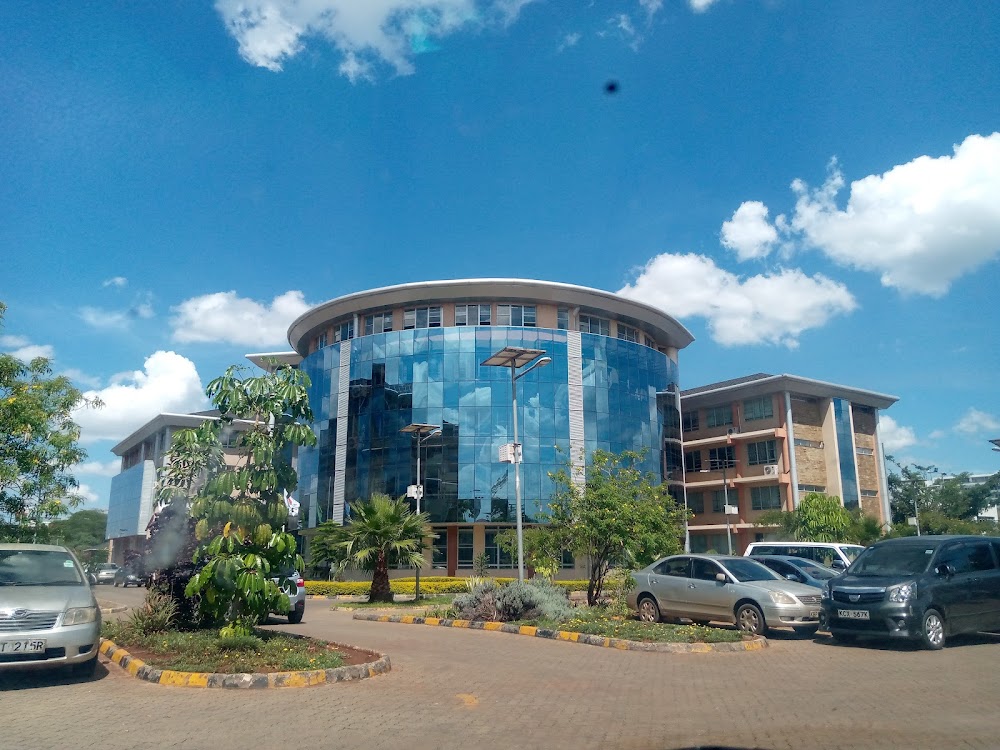
The 2026 MT Paloma fuel scandal exposed how senior officials at EPRA, KPC, and the State Department of Petroleum allegedly manipulated the national supply chain for private benefit.
The NOCK board seat occupied by Gakunga while simultaneously serving Bol Mel’s sanctioned network represents the same logic operating at the international level: state institutional access deployed in service of private capture. What makes Gakunga’s case particularly acute is the identity of his partners. Benjamin Bol Mel is not merely a corrupt businessman.
He is a US-designated individual found to have engaged in procurement fraud that impoverished one of the world’s poorest countries — a country whose oil revenues were looted while its population endured civil war, famine, and displacement. The Kenyan executive who sat on his corporate board, while simultaneously drawing a state parastatal appointment in Nairobi, was not an innocent bystander.
Kenya has been called upon by The Sentry to investigate and prosecute illicit money flows connected to South Sudan’s oil kleptocracy. That call has gone unanswered for nearly four years. The name of a NOCK board member appears in the evidence. The question is whether Kenya’s accountability institutions will act — or continue to look away.