The Sacco Societies Regulatory Authority (SASRA) recently released its Annual Sacco Supervision Report for 2024 in March 2026. The report revealed that the total assets of regulated deposit-taking SACCOs (DT-SACCOs) and non-withdrawable deposit-taking SACCOs (NWDT-SACCOs) combined reached KSh 1.076 trillion. This marked a significant increase from KSh 971.76 billion in 2023, reflecting the continued growth and resilience of Kenya’s SACCO sub-sector. The report highlights that net loans formed the backbone of SACCO assets, accounting for 73.36% of the total, equivalent to KSh 789.42 billion. This proportion has been progressively increasing from 70.95% in 2021, indicating an overall increase in lending and intermediation by regulated SACCOs.
Which are the top 10 biggest DT-SACCOs in Kenya by assets?
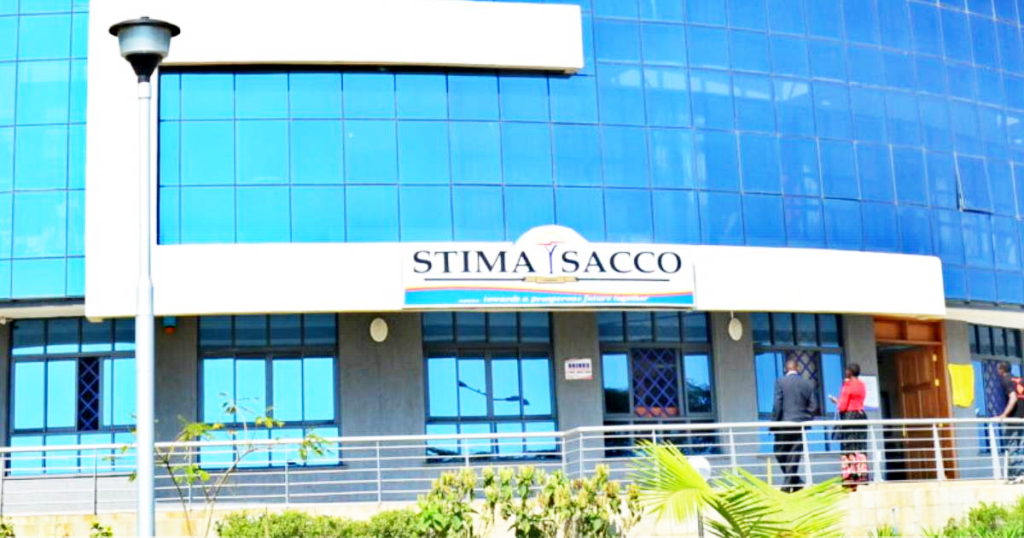
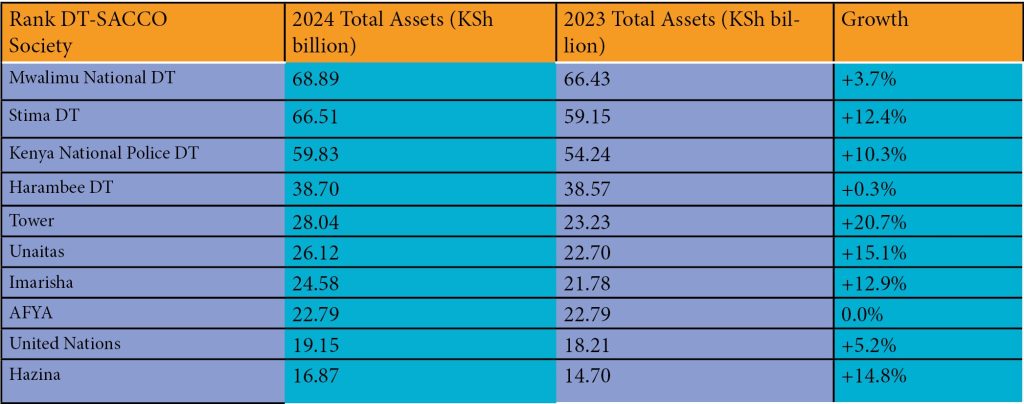
The table below ranks the largest deposit-taking SACCOs in Kenya based on their total assets as presented by SASRA. Notably, the total assets as of 2026 could have slightly increased or reduced. Mwalimu National DT, the teachers’ SACCO, remained the undisputed leader with assets of KSh 68.89 billion, though its growth was modest at 3.7% compared to the previous year. Stima DT, serving the energy sector, recorded impressive growth of 12.4% to reach KSh 66.51 billion, closing the gap with the top position.
Which are the largest non-withdrawable DT-SACCOs (NWDT)?
For non-withdrawable deposit-taking SACCOs, which do not allow members to withdraw their deposits on demand, the asset base is considerably smaller. The top four large-tiered NWDT-SACCOs in 2024 were:
The continued growth of Kenya’s largest SACCOs demonstrates the strength and stability of the cooperative movement in mobilising savings and providing affordable credit to millions of Kenyans. SACCOs play a vital role in the financial inclusion agenda, particularly for salaried workers in the public sector, teachers, police officers, healthcare workers, and employees of major corporations.

How much credit did SACCOs provide?
In other news, regulated SACCOs disbursed KSh 115.73 billion in loans during the first quarter of 2026, representing a 16.23% increase from KSh 99.57 billion in the same period of 2025. According to the Sacco Societies Regulatory Authority (SASRA) Quarterly Sacco Sector Stability Report, education and related services received the largest share of credit at KSh 24.81 billion, followed by land (KSh 18.45 billion) and housing (KSh 15.29 billion), bringing total lending to the land and housing sectors to KSh 33.74 billion. Other major beneficiaries included wholesale and retail trade, crop farming, animal production, consumer staples, manufacturing services, transport, and mortgage finance.