Nairobi County went to court accusing Co-operative Bank of holding on to public revenue that should have gone straight into the County Revenue Fund, as the law requires.
By Staff Writer
For months ,Co-operative Bank of Kenya has been battling Nairobi County’s revenue accounts at High Court, Nairobi.
A recent court ruling has now cleared the way for Coop to keep doing so — at least for now. The bank has won first round of a legal battle with City Hall over Sh692.6 million it says the county owes it. Justice David Mburu did not grant Nairobi County the urgent orders it wanted to freeze the lender out of its own collection account.
Nairobi County went to court accusing Co-operative Bank of holding on to public revenue that should have gone straight into the County Revenue Fund, as the law requires. The account, is which city collects money from residents every single day — parking fees paid by motorists hunting for space in the CBD, business permits, market cess, and a long list of other charges. In effect, it is the account that keeps the county running.
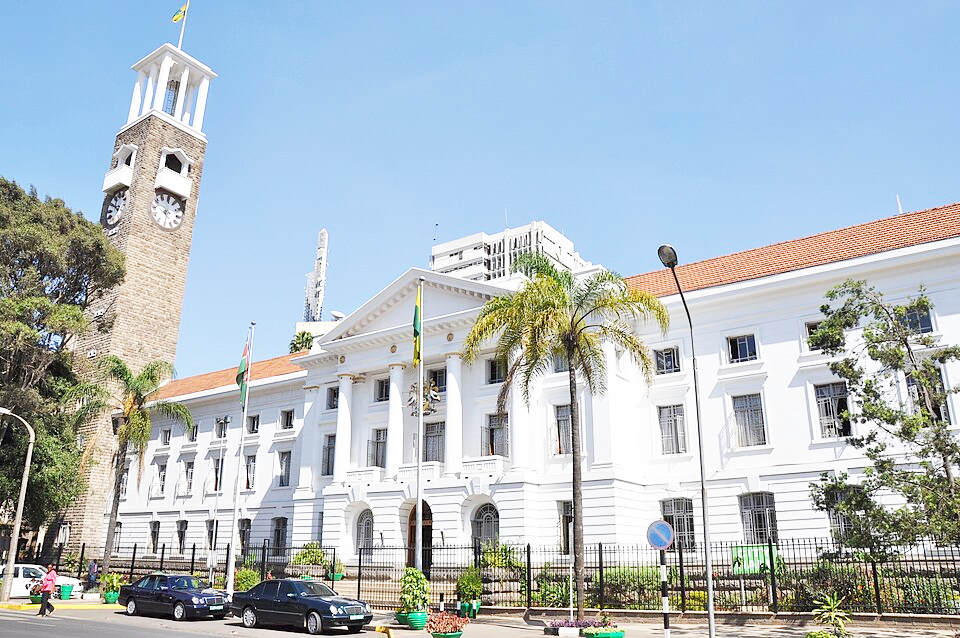
Justice Mburu in his ruling found that the disagreement between City Hall and the bank was rooted in a banking agreement, not a constitutional question, and so did not meet the threshold for the kind of emergency intervention the county was asking for. “A determination pertaining to such commercial rights and obligations is not a constitutional question but a commercial dispute that ought to be heard and determined in a different forum,” the judge said, dismissing the county’s application and, for now, leaving the bank free to keep recovering its money from the revenue account.
The bank advanced Sh692,586,116 to Nairobi County to make sure county employees got paid on time, stepping in before funds from the National Treasury had actually landed in the county’s coffers. When Nairobi County later shifted its payroll business to another financial institution ,Sidian Bank owned by President William Ruto without first settling that advance, the bank invoked its right of set-off under a Memorandum of Understanding the two sides signed in July 2025 — essentially deducting what it is owed directly from the revenue flowing through the account it controls, rather than waiting for the county to repay it separately.


According to County Attorney Boniface Waweru , the money being withheld was not surplus cash sitting idle — it was money the county needed to run itself. Waweru told the court the funds were required to pay salaries and pensions, settle supplier invoices, support healthcare services and sanitation programmes, fund infrastructure projects, and meet other obligations already locked into the county’s approved budget. At a Senate Public Accounts Committee session held in late November 2025, Governor Johnson Sakaja was grilled over the county’s audited financials for the 2023/2024 financial year.
Auditor-General Nancy Gathungu’s office flagged Sh68.4 million in bank charges that her team could not properly account for — deductions the auditors described as unsupported, undocumented, and calculated on interest bases that did not add up. Senators pressed Sakaja on a specific, damning arithmetic: for every Sh100 a motorist pays for on-street parking in Nairobi, only around Sh30 was said to be reaching the county, with roughly Sh70 disappearing into what the bank characterised as transaction or ledger fees. Sakaja defended the deductions as standard charges for processing high volumes of small-value transactions, insisting they built up over time rather than being levied per transaction, and blamed legacy arrangements that predated his own administration. But even he reportedly conceded that the optics — pay Sh100, net Sh30 — were hard to defend.

Nairobi’s parking system was digitised back in 2019 through the Nairobi Pay platform and a USSD shortcode, specifically to cut out the cash leakages associated with askaris and touts collecting fees by hand. Motorists in Zone 1, covering CBD hotspots like Kencom House, pay Sh300 a day for saloon cars, with the money routed into county accounts held at Co-operative Bank and Equity Bank. The platform now has over a million users and, according to a Controller of Budget report from September 2025, parking is one of the county’s top revenue earners alongside land rates and permits. That scale is precisely what makes the fee structure so consequential: thousands of small transactions a day, each shedding a disproportionate cut, adds up fast. A rough estimate — 10,000 motorists parking daily in the CBD alone — works out to roughly Sh7 million a year lost to fees, a figure that lines up uncomfortably well with the Sh68 million the Auditor-General flagged over a full financial year.

The Senate hearing also surfaced a wider governance problem that makes the bank relationship harder to untangle. Gathungu’s audit found 174 unauthorised commercial bank accounts spread across various institutions, including Co-operative Bank, holding idle county funds even as Nairobi carries a debt pile of around Sh10 billion. Under the Public Finance Management Act, counties are supposed to operate no more than two Central Bank of Kenya accounts plus a limited number of designated commercial accounts — not a sprawl of over a hundred and seventy unauthorised ones. Senators described that sprawl as fertile ground for money to go missing, and Co-operative Bank, as a tier-one lender with deep, longstanding ties to government business and the Sacco sector, holds a significant share of those accounts.
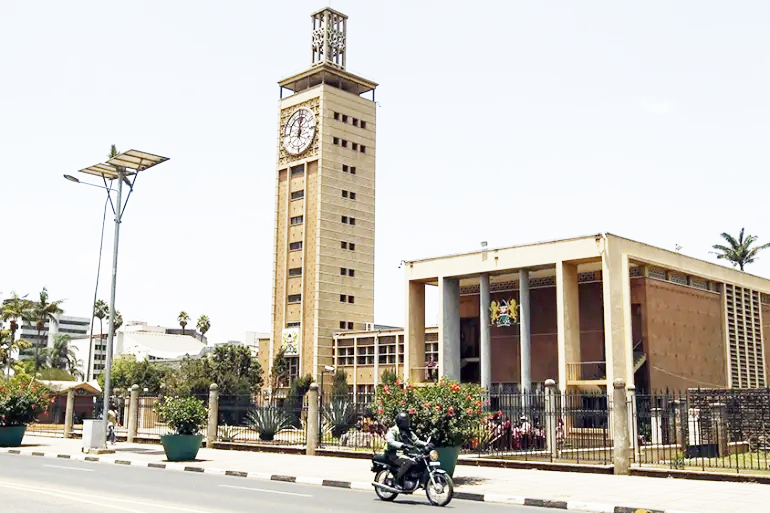
In November 2025, Sakaja directed that all 69 county health facilities move their banking from Co-operative Bank to Sidian Bank, a much smaller tier-three lender formerly known as K-Rep. Nairobi’s revenue for the current financial year is projected at around Sh25 billion, money that is meant to cover salaries, road maintenance, healthcare and the rest of the county’s obligations.