The emerging scrutiny of how Principal Secretary for the State Department for Internal Security and National Administration, Dr Raymond Omollo, utilizes more than Sh 30 million per month on government bloggers shows how Kenya’s political battlefield is increasingly shifting from campaign rallies, television debates and newspaper headlines to social media platforms.
Social media platforms are increasingly becoming the avenues where political narratives are created, contested and amplified within seconds. Facebook, X (formerly Twitter), TikTok, WhatsApp, Instagram and YouTube have evolved into powerful political arenas capable of shaping public opinion, influencing voter behaviour and determining the success or failure of political messaging.
Against this backdrop, reports of internal disagreements within President William Ruto’s communication machinery have brought Dr Omollo, into the spotlight. According to government insiders, concerns have emerged over the effectiveness of a team of government-aligned bloggers reportedly operating under his office to defend the Kenya Kwanza administration against increasingly organised opposition digital campaigns.
The reported concerns come at a time when political communication in Kenya is undergoing a fundamental transformation. Since the anti-Finance Bill protests of 2024, many political observers have argued that the opposition has gained a significant advantage in shaping online discourse, forcing the government to rethink its communication strategy ahead of the 2027 General Election. Whether these concerns reflect genuine shortcomings or merely internal political positioning, they highlight one undeniable reality: social media has become one of the most influential battlegrounds in modern Kenyan politics.
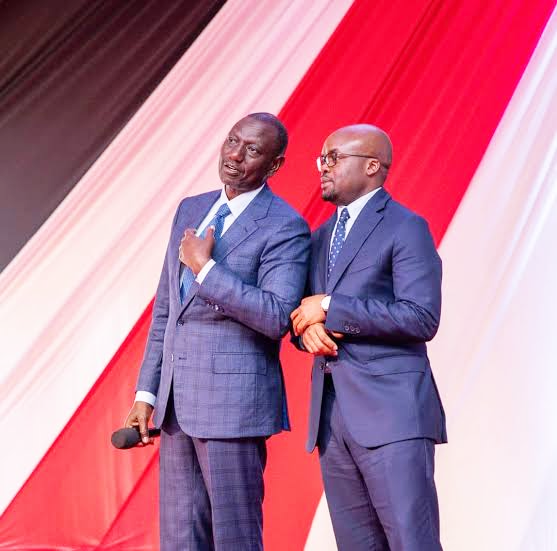
Reports from within government circles indicate that some members of President Ruto’s communication team have questioned the effectiveness of bloggers reportedly coordinated through the office of Dr Omollo. According to the reports, the government allocates more than Sh30 million every month towards digital communication and online engagement. However, critics within government allegedly believe that the investment has not produced the expected results, particularly in countering online narratives promoted by opposition activists and influencers.
These reports remain unverified officially, but they have fuelled discussions within political circles regarding whether the current digital communication strategy is delivering value for money. Government insiders reportedly argue that pro-government bloggers have struggled to match the influence of digital activists aligned with former Deputy President Rigathi Gachagua and Nairobi Senator Edwin Sifuna, and his Linda Mwananchi movement, which have maintained a strong presence across multiple social media platforms.
The debate reflects a broader concern that winning public opinion increasingly depends not only on policy achievements but also on controlling digital narratives. Many analysts trace the government’s digital communication challenges to the nationwide Gen Z demonstrations that erupted in June 2024 over the Finance Bill 2024/25. Unlike previous political protests organised by established political parties, the demonstrations were largely coordinated through social media. Young Kenyans used X, TikTok, Facebook, Telegram, Instagram and WhatsApp to mobilise, share live updates, expose police actions and organise nationwide protests without identifiable political leadership.
The climax came when protesters breached Parliament during the passage of the Finance Bill, an unprecedented event that attracted global attention. The protests demonstrated the extraordinary ability of decentralised digital activism to influence national politics. For many communication experts, the demonstrations fundamentally altered Kenya’s political communication landscape. Traditional government communication channels struggled to keep pace with the speed at which information and, in some instances, misinformation, spread online.
Since then, critics argue that the government has consistently found itself reacting to online narratives rather than shaping them. It is against this background that questions have reportedly emerged regarding how government resources allocated to digital communication are being utilised and whether existing strategies require a comprehensive review. The debate intensified following the Ol Kalou parliamentary by-election, where government supporters reportedly viewed the outcome as evidence of weaknesses in digital mobilisation.
According to political observers, the government’s online campaign failed to effectively counter anti-government messaging during the campaign period. This resulted in the humiliating defeat of the United Democratic Alliance (UDA) candidate, Samuel Muchina Nyaga, who secured a5,450 votes, against Democracy for the Citizens Party (DCP) candidate Sammy Kamau Ngotho who won decisively with about 35,440 votes.
Although election outcomes are influenced by numerous factors; including local political dynamics, candidate popularity, grassroots mobilisation and voter turnout, the scale of the defeat prompted fresh questions regarding the effectiveness of government communication strategies, particularly on digital platforms. Some State House operatives reportedly believe that the government’s online communication machinery failed to shape public perception during the campaign. The current debate also reflects changes within the government’s communication architecture. During the early years of the Kenya Kwanza administration, digital communication was largely associated with Dennis Itumbi, a veteran digital strategist widely recognised for his extensive experience in online political mobilisation.
Itumbi now serves as Head of Presidential Special Projects and Creative Economy Coordination, while responsibility for sections of government digital communication has reportedly shifted to other offices. Political observers note that changes in communication structures inevitably invite comparisons, particularly when governments encounter difficulties in controlling political narratives. Whether such comparisons are entirely fair remains open to debate, but they demonstrate the growing importance attached to digital communication within modern governance. The prominence of social media in Kenyan politics mirrors a global trend.
Political communication refers to the exchange of information, ideas and opinions between governments, political parties, candidates, the media and citizens. Traditionally, newspapers, television, radio and public rallies dominated this process. Today, however, digital platforms have fundamentally altered political engagement. Unlike traditional media, social media removes editorial gatekeepers, enabling politicians to communicate directly with citizens while allowing voters to respond instantly.
This two-way communication has transformed citizens from passive consumers of political information into active participants in political discourse. Consequently, governments can no longer rely solely on official press conferences or television interviews to shape public opinion. Kenya has one of Africa’s most vibrant digital populations. Young people constitute the majority of internet users and increasingly obtain political information through smartphones rather than conventional media outlets.
Hashtags frequently become national conversations, influencing news coverage and even parliamentary debate. Digital platforms also provide opportunities for civic participation, enabling citizens to question leaders, expose corruption, discuss legislation and monitor government performance in real time. Moreover, livestreams, podcasts and short-form videos have made political communication faster, cheaper and significantly more interactive. These developments explain why every serious political campaign now invests heavily in digital communication. Social media offers numerous democratic benefits.
Firstly, it democratises political participation by allowing smaller political parties and independent candidates to reach voters without incurring enormous advertising costs. Secondly, it enhances accountability. Citizens can record events, document alleged misconduct and demand explanations from public officials. And thirdly, digital platforms encourage broader public debate by bringing together citizens from different regions, age groups and social backgrounds. Furthermore, election information, including voter education, polling procedures and official announcements, can be disseminated rapidly, improving public awareness. In many respects, social media has strengthened democratic engagement by giving ordinary citizens a louder political voice.
However, the same platforms that strengthen democracy also create significant challenges. Misinformation and disinformation remain perhaps the greatest concern. False news, manipulated images, edited videos and AI-generated content can spread rapidly before verification occurs. Political actors may deliberately exploit such content to influence public opinion or undermine opponents. Kenya has also experienced episodes of online hate speech and ethnic mobilisation during election periods.
If left unchecked, inflammatory digital content has the potential to heighten political tensions. Another growing concern involves online harassment directed at politicians, journalists, activists and ordinary citizens participating in political discussions. Algorithm-driven echo chambers further complicate matters by exposing users primarily to content that reinforces their existing political beliefs, contributing to greater political polarisation.
As Kenya moves closer to the 2027 General Election, digital communication is expected to become even more influential. Political campaigns are likely to devote unprecedented resources to social media advertising, influencer partnerships, online fundraising and targeted messaging. Candidates will increasingly use TikTok, Instagram Reels, Facebook Reels, YouTube Shorts and livestreamed town halls to engage younger voters. Artificial intelligence is also expected to reshape campaign communication through personalised messaging and automated content creation.
At the same time, AI-generated misinformation, including deepfake videos and fabricated audio recordings, poses new risks that electoral authorities, technology companies and civil society organisations will need to address. Election observers also anticipate increased use of smartphones to monitor polling stations, report irregularities and share election updates in real time. Consequently, digital communication may prove just as important as traditional campaign rallies.
The central question now facing the Kenya Kwanza administration is whether it can successfully regain control of online political narratives before the next presidential election. Some State House insiders reportedly fear that if opposition groups continue dominating digital conversations, communicating government achievements to the electorate may become increasingly difficult. Nevertheless, political communication experts caution that social media alone rarely determines election outcomes. Economic performance, governance, service delivery, candidate appeal, party organisation and grassroots mobilisation remain decisive electoral factors.
However, digital platforms increasingly influence how citizens interpret these issues. Winning the online conversation therefore complements not replaces, effective governance. To maximise the benefits of social media while minimising its risks, several measures deserve consideration before 2027. Digital literacy programmes should equip citizens to identify misinformation and verify online content before sharing it. Technology companies should continue improving mechanisms for detecting coordinated disinformation campaigns while balancing the protection of freedom of expression.
The Independent Electoral and Boundaries Commission (IEBC), together with other public institutions, should strengthen official digital communication to counter rumours promptly and improve public confidence. Political parties also have a responsibility to promote issue-based campaigns rather than relying on personal attacks or inflammatory rhetoric. Finally, journalists, researchers and independent fact-checking organisations will continue playing an essential role in verifying claims circulating online.
The reported scrutiny facing Dr Omollo’s digital communication team illustrates a broader reality: Kenya’s political contests are increasingly fought online as much as they are on the campaign trail. Whether or not the reported internal criticisms ultimately result in changes within the government’s communication strategy, they underscore the growing recognition that digital influence has become a strategic political asset.
Since the 2024 Gen Z protests, social media has demonstrated its capacity to mobilise citizens, shape national conversations and influence political perceptions at unprecedented speed. As a result, both the government and the opposition are investing heavily in digital engagement ahead of the 2027 presidential election. Ultimately, social media is unlikely to determine Kenya’s next president on its own. Elections are won through a combination of governance, public trust, economic performance, grassroots organisation and persuasive leadership.
Nevertheless, in an era where millions of voters obtain their political information online, the battle for digital influence may significantly shape how those broader issues are understood by the electorate. The 2027 election is therefore expected to be not only a contest of policies and personalities but also a contest of narratives, one in which the side that communicates most effectively, responds most rapidly and builds the greatest public trust across digital platforms may enjoy a significant strategic advantage.